
Article
Choosing payment gateways for international sales
Cards, wallets and bank transfer each have a place. The right mix depends on where your customers are and what you sell.
A
Al Emran
Oct 30, 2026
1 views
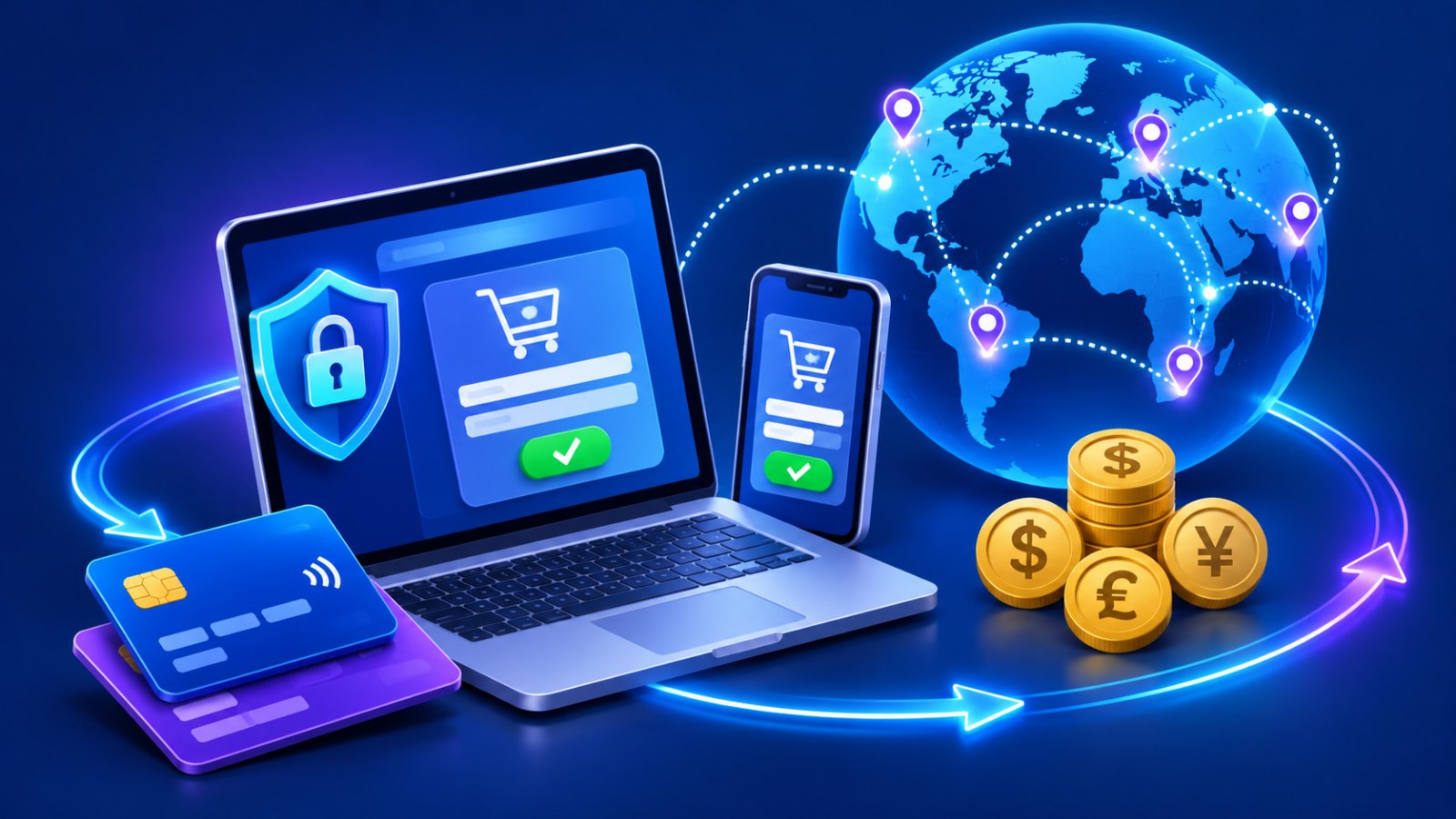
Customers abandon a checkout that does not offer the way they want to pay. Selling internationally means offering a few options, chosen deliberately.
Cards are the baseline. A provider such as Stripe, or a bank-backed gateway such as Mastercard Payment Gateway Services (MPGS) or CyberSource, covers Visa and Mastercard in most markets, with 3-D Secure for strong customer authentication.
Wallets such as PayPal reduce friction for customers who do not want to type card details, and are popular for digital goods and cross-border purchases.
Bank transfer still matters for B2B. Larger invoices are often paid that way, and it avoids card fees. It needs a clear reference on every payment and a process to match transfers to invoices.
Whatever the mix, verify every payment on the server through the gateway's webhook or API, never from the browser redirect alone. Log every callback, keep refunds in the same system as payments, and make sure the currency on the invoice is the currency you settle in.
Keep reading
More from the Vexoora IT team

Why your website feels slow, and the five fixes that usually solve it
Images, fonts, caching, third-party scripts and the server. Fix those in order and most sites pass Core Web Vitals.

Shared hosting, VPS or cloud: what your platform actually needs
Most sites start on shared hosting and should move the day they start making money. Here is how to tell when.

Ten things to check before a Laravel app goes live
Debug off, HTTPS on, files private, queues running, backups tested. A launch checklist for every project.