
Article
Selling digital goods at scale: automating fulfilment with supplier APIs
Gift cards, game credits and licence keys are sold in seconds. The platform behind them has to order, deliver and reconcile just as fast.
A
Al Emran
Oct 15, 2026
1 views
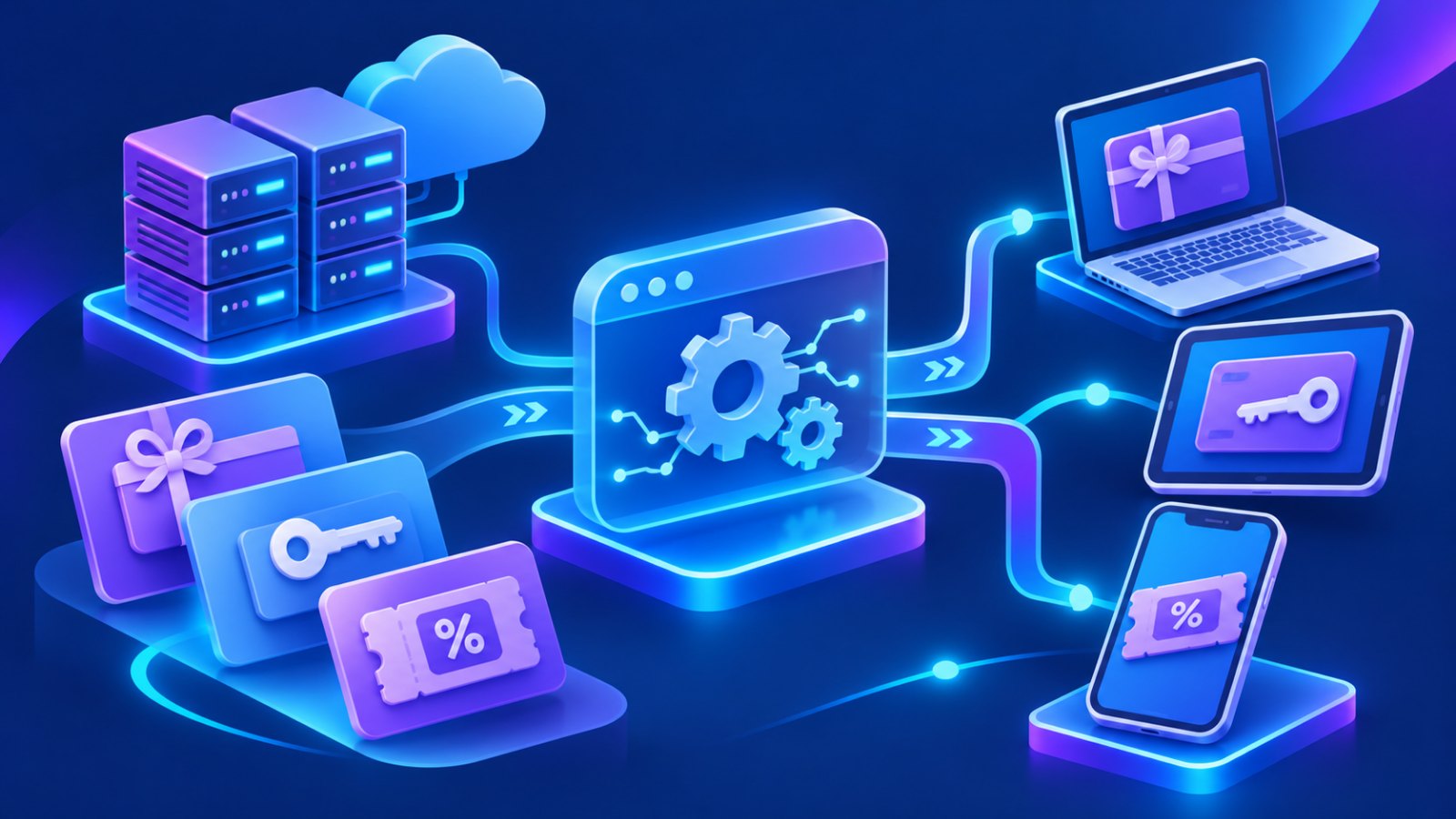
A digital-goods platform looks like any online store from the front. Behind it, the work is very different: there is no warehouse, the stock lives in a supplier's system, and a customer expects their code the moment payment clears.
Start with the catalogue. Each product maps to one or more supplier SKUs, with cost, price and availability kept in sync on a schedule, not typed by hand.
Then the order flow. Payment confirmed, the platform calls the supplier API, receives the code or the top-up confirmation, stores it encrypted and delivers it to the customer. Every step is logged, and every call is retried safely, so a timeout never turns into a double purchase.
Reconciliation closes the loop. Daily reports compare what was paid, what was ordered from each supplier and what was delivered. Anything that does not match is flagged for a person before it becomes a loss.
Finally, the admin dashboard: margins per product and supplier, failed orders to retry, refunds, and fraud checks. Built this way, a platform can grow from one supplier to many without the operations team growing with it.
Keep reading
More from the Vexoora IT team

Why your website feels slow, and the five fixes that usually solve it
Images, fonts, caching, third-party scripts and the server. Fix those in order and most sites pass Core Web Vitals.
Shared hosting, VPS or cloud: what your platform actually needs
Most sites start on shared hosting and should move the day they start making money. Here is how to tell when.

Ten things to check before a Laravel app goes live
Debug off, HTTPS on, files private, queues running, backups tested. A launch checklist for every project.