Visa's own gateway, wired in by someone who has done it before
CyberSource is what large merchants and banks in this region are asked to use, and it is not a gateway you integrate in an afternoon. The API is broad, the documentation assumes you already know the vocabulary, and the difference between a working integration and a compliant one is mostly in the parts nobody demos.
What we integrate
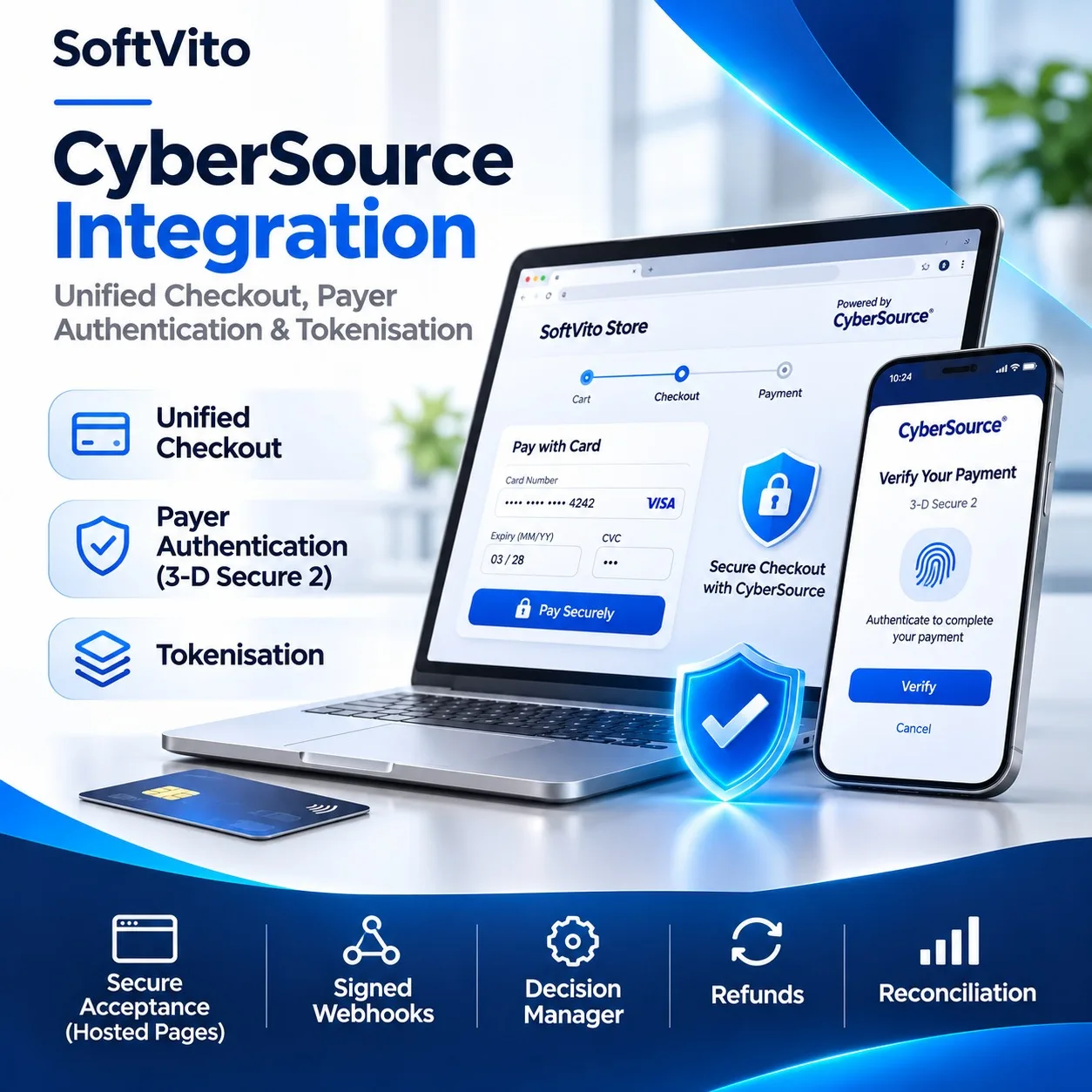
- Unified Checkout — one embedded component covering cards and the alternative methods CyberSource supports, so you are not rebuilding the front end each time a method is added
- Hosted Payment Pages / Secure Acceptance where a redirect suits you better than an embed
- Direct API integration when you need full control of the flow and already hold the PCI scope for it
- Whichever route we take, card data never reaches your server — the point of the exercise is keeping your PCI scope at SAQ A
Payer Authentication (3-D Secure 2)
- Full 3DS2 flow through CyberSource Payer Authentication — setup, enrolment check, challenge and validation
- Frictionless authentication configured properly, so low-risk transactions pass without an OTP instead of forcing every customer through a challenge screen that loses a share of them
- The challenge window handled as a real state, including the customer who closes it — that transaction is neither paid nor failed, and it must not sit as "pending" forever
- Liability shift confirmed and recorded against the transaction
Tokenisation
- Token Management Service for stored cards, so a returning customer does not re-enter a card and you do not store one
- Network tokens where available — cards that keep working after reissue, which quietly recovers a slice of failed recurring payments
- Customer, payment-instrument and shipping-address tokens tied to your own user records
The parts people get wrong
Webhooks that reconcile. Notifications arrive twice, out of order, or not at all. We build idempotent handlers with signature verification, plus a scheduled sweep that queries CyberSource for anything that went quiet — so a payment is never lost because a webhook was.
Decision Manager responses handled as their own outcome — a transaction under fraud review is not an error and must not read as one to your operations team.
Refunds, partial refunds, voids and captures wired through to your order system, each carrying the CyberSource reference so finance can match a line to a settlement report.
How it runs
- Day 1: review your checkout and confirm what your merchant account is enabled for
- Days 2–6: sandbox integration, every path tested — approved, declined, challenged, abandoned, refunded, reviewed
- Day 7: production keys, a live low-value transaction, refunded immediately
- Handover: documentation, test-card reference, and where to look when a payment goes missing
Platforms
Laravel · WordPress and WooCommerce · custom PHP · Node.js · .NET · Flutter and React Native · native Android and iOS
Scope note
Covers one platform and one merchant account, with card payments and 3DS. Recurring billing, multiple currencies or several storefronts are quoted after a short call. Your merchant agreement with CyberSource is yours — we prepare the technical evidence they ask for.

 Paid