The connection will drop. The queue will not care.
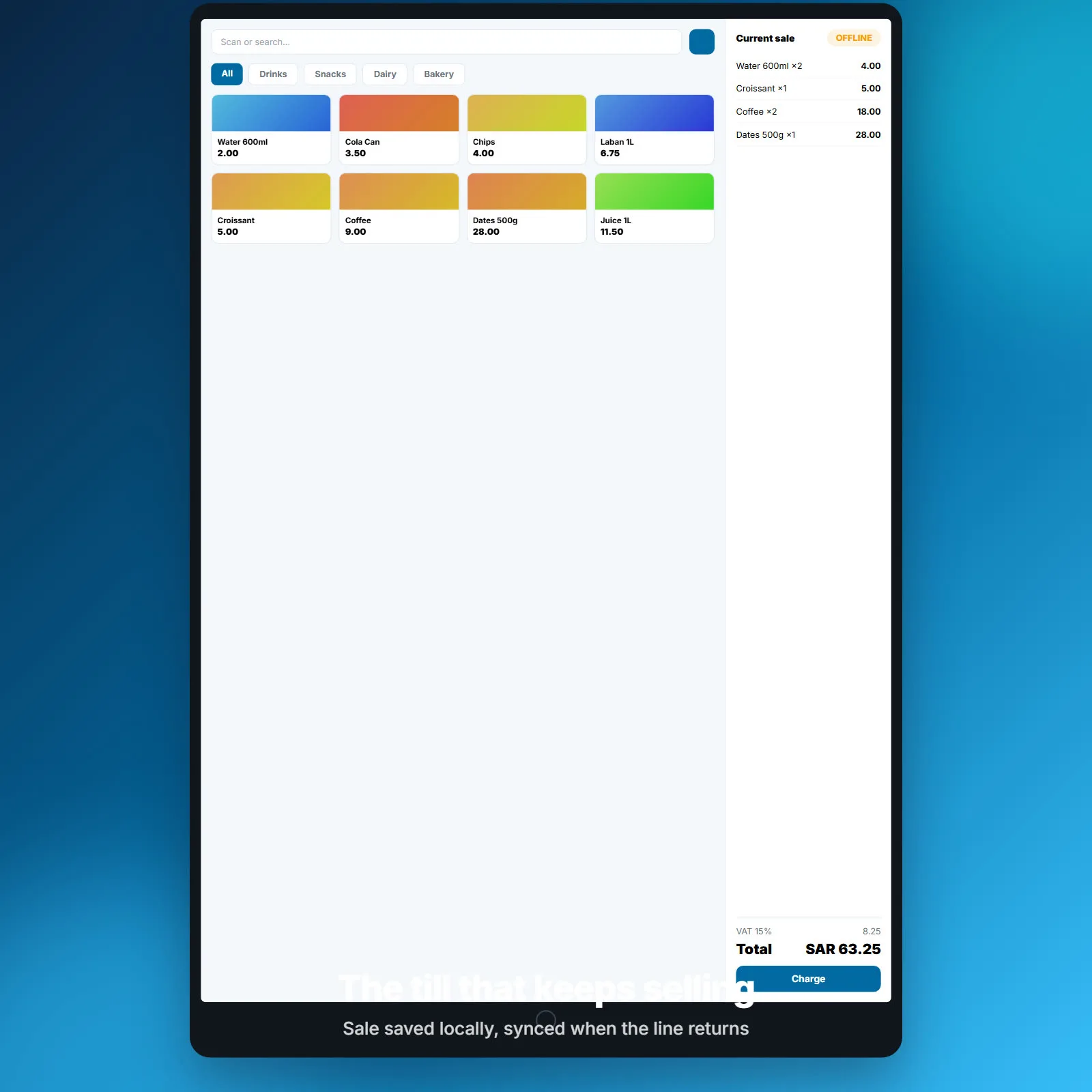
Most point-of-sale apps are a web view with a spinner. The moment the shop Wi-Fi wobbles, the queue stops moving and the cashier starts apologising. Rassd is built the other way round: every sale is written to the local database first and confirmed to the cashier immediately, then pushed to the server whenever the network is there to push it.
At the counter
- Barcode scanning through the camera or any USB/Bluetooth HID scanner
- Product grid by category, favourites row, and search by name, SKU or barcode
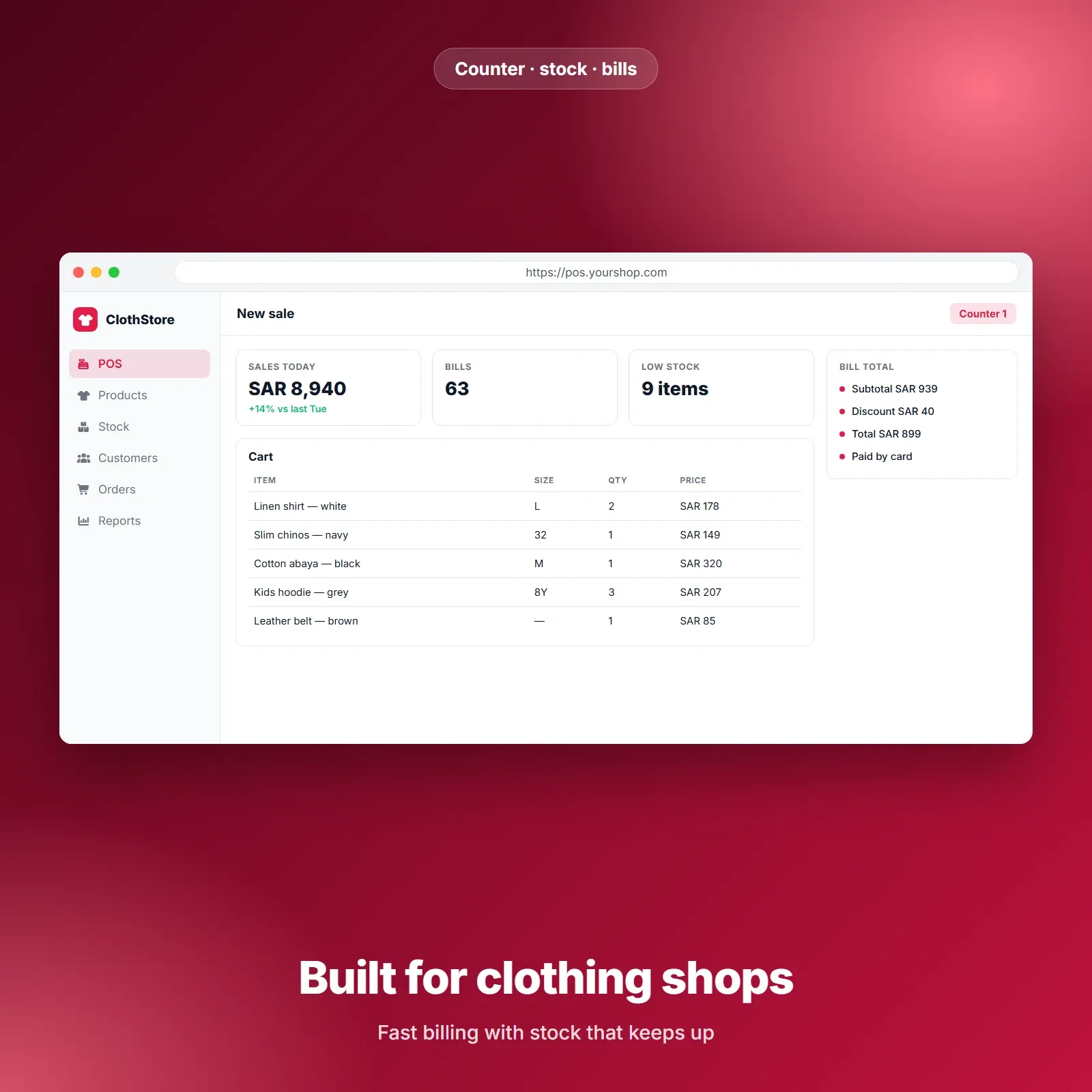
- Split payment across cash and card on one sale, with change calculated
- Held sales — park a basket, serve the next customer, come back to it
- Returns and exchanges against the original receipt, and partial refunds
- Line and basket discounts, by amount or percentage, with a permission gate on both
Printing
- ESC/POS over Bluetooth, USB and network, tested against 58mm and 80mm printers
- Receipt designer: your logo, VAT number, footer text, Arabic and English side by side
- ZATCA-compliant TLV QR code printed on every simplified tax invoice
- Cash drawer kick, and a reprint that is marked as a reprint
Stock
- Quantity decrements locally at the moment of sale, so the number on screen is the number on the shelf
- Stock counts, adjustments with a reason, and transfers between branches
- Low-stock alerts and a reorder report
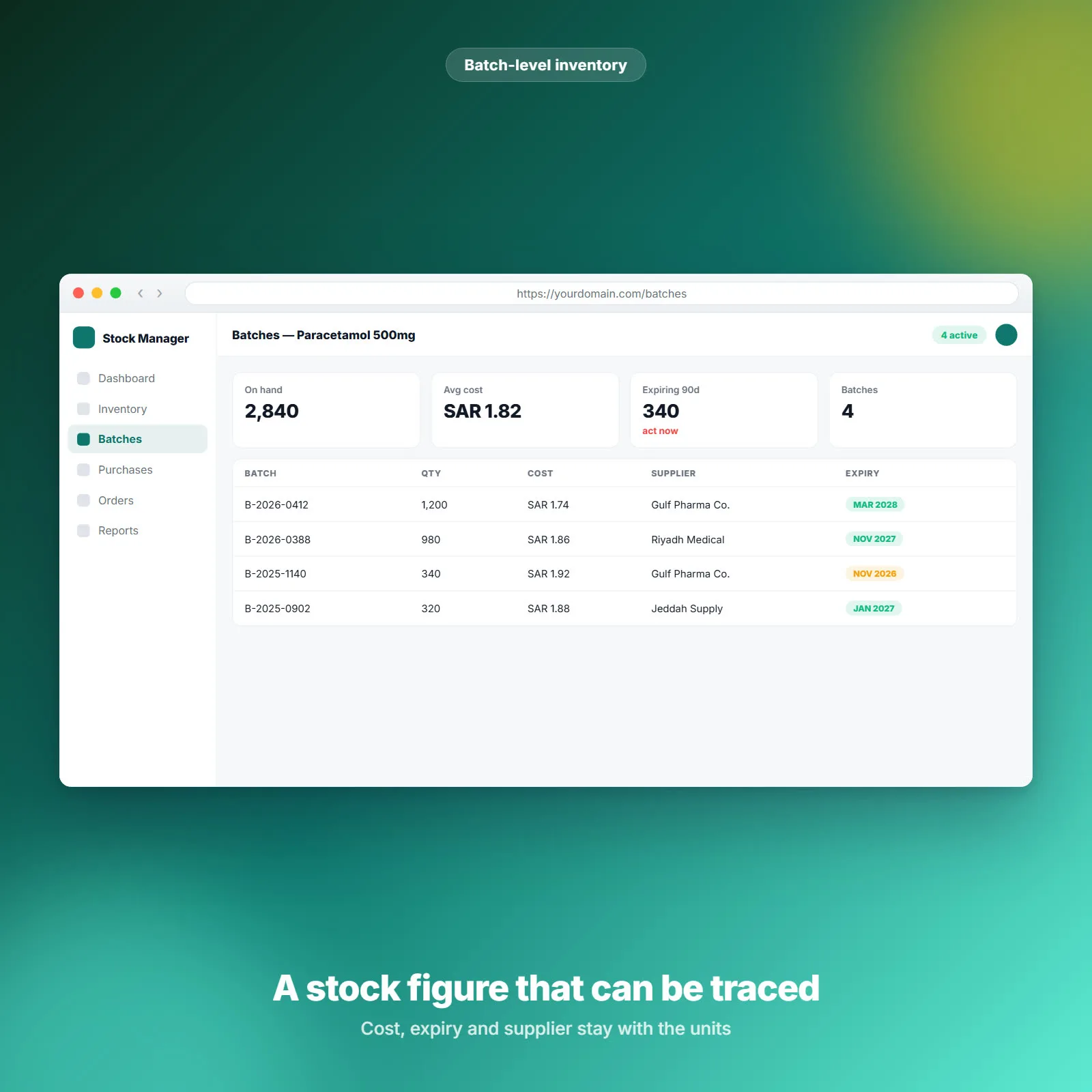
- Purchase entry with supplier and cost, feeding a real margin figure
- Variants (size, colour) and units of measure, including weighted items from a scale barcode
Sync
- A durable outbox: sales queue on device and drain in order, surviving a force-close or a flat battery
- Conflict resolution that never silently discards a sale — a rejected push is surfaced, not swallowed
- Multi-device and multi-branch, each till with its own sequence, consolidated server-side
- Shift open and close with a cash-count reconciliation and an X/Z report
Stack
- App: Kotlin, MVVM, Jetpack Compose
- Local store: Room, with WorkManager driving the sync
- Network: Retrofit + OkHttp against a documented REST API
- Backend: Laravel API included in the package
- Min SDK: 24 (Android 7.0), tested up to Android 15
What you get
Full Android Studio project, the Laravel backend, the API documentation, the ESC/POS command reference used for the receipt layer, and the build-and-signing guide.

 Paid