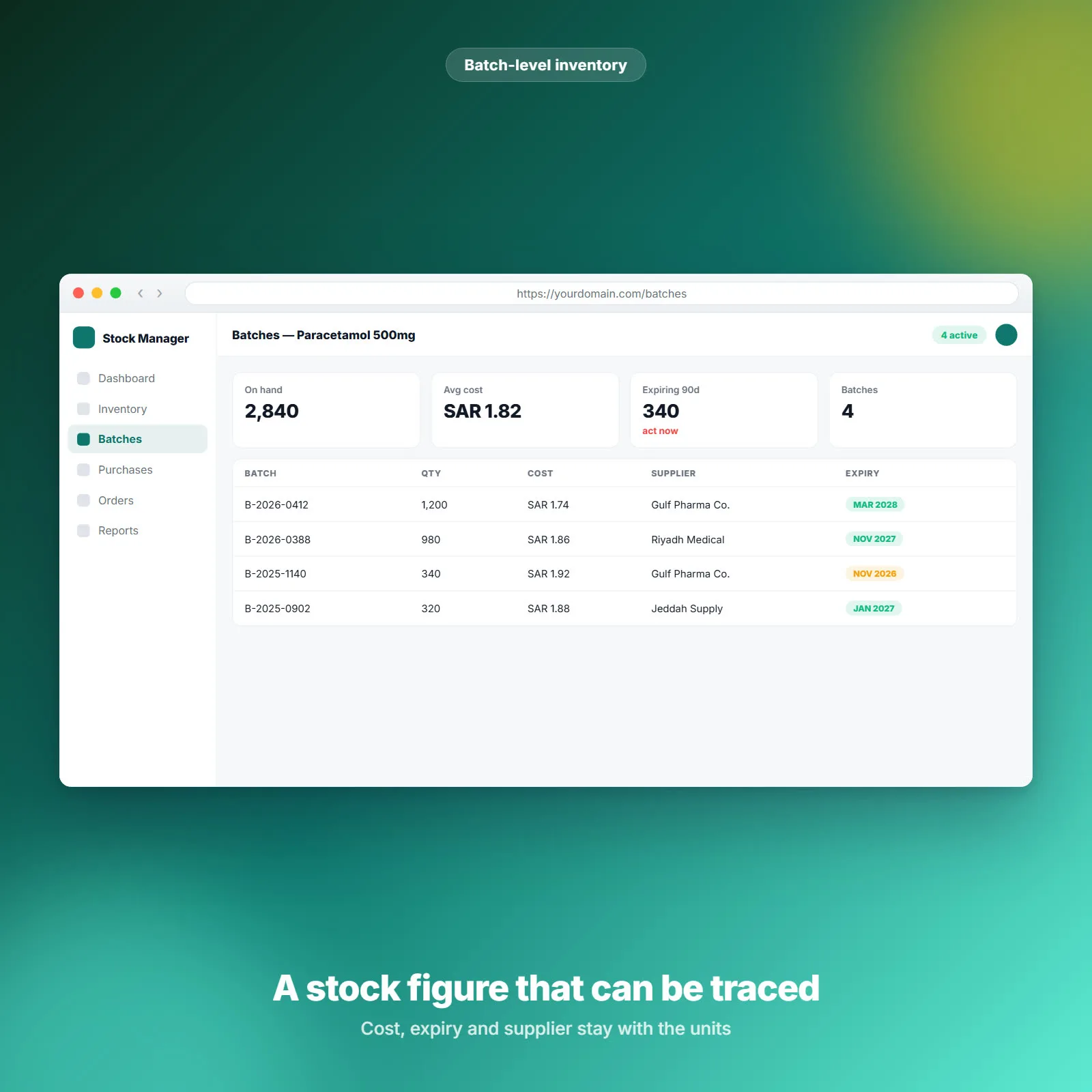
A stock figure that can be traced
Most inventory systems store one number per product. That number cannot tell you which delivery the units came from, what they cost, or when they expire. Stock Manager tracks inventory in batches, so every unit on the shelf still knows where it came from and what it cost — which is the difference between a stock system and a counter.
Inventory
- Batch-level tracking — cost, quantity and dates held per batch rather than per product
- Inventory records with attribute values, so a variant carries its own stock
- Attributes and attribute options you define — size, capacity, material, whatever the trade needs
- Colours as a first-class dimension alongside attributes
- Brands and categories for organising the catalogue
- Product specifications stored separately from the description, so they can be compared and filtered
Purchasing
- Purchase records with line items, feeding batches directly
- Cost captured at purchase, which is what makes real margin reporting possible later
- Supplier and delivery details held against each purchase
Selling
- Orders with line items, drawing down the right batches
- Coupons with their own rules
- Delivery methods and payment methods, both configurable rather than hard-coded
- Customer accounts and a storefront with banners and blog content
Staff and control
- A permission table driving what each staff member can reach — a stockroom assistant does not see the purchase costs
- An activity log across the system, so a change has a name and a time against it
- API keys for connecting your own tools
- Notifications for the events that matter
Documents
PDF generation through dompdf — invoices, purchase orders and stock reports as real documents, not screenshots of a table.
Sign-in
Socialite is wired in, so customers can sign in with a social account instead of inventing another password.
Stack
- Backend: Laravel, PHP 8.2+
- PDF: barryvdh/laravel-dompdf
- Auth: Laravel Socialite
- Scale: 38 models covering inventory, purchasing, sales, content and administration
What you get
Full source with migrations and seeders — the admin side and the storefront in one application.

 Paid