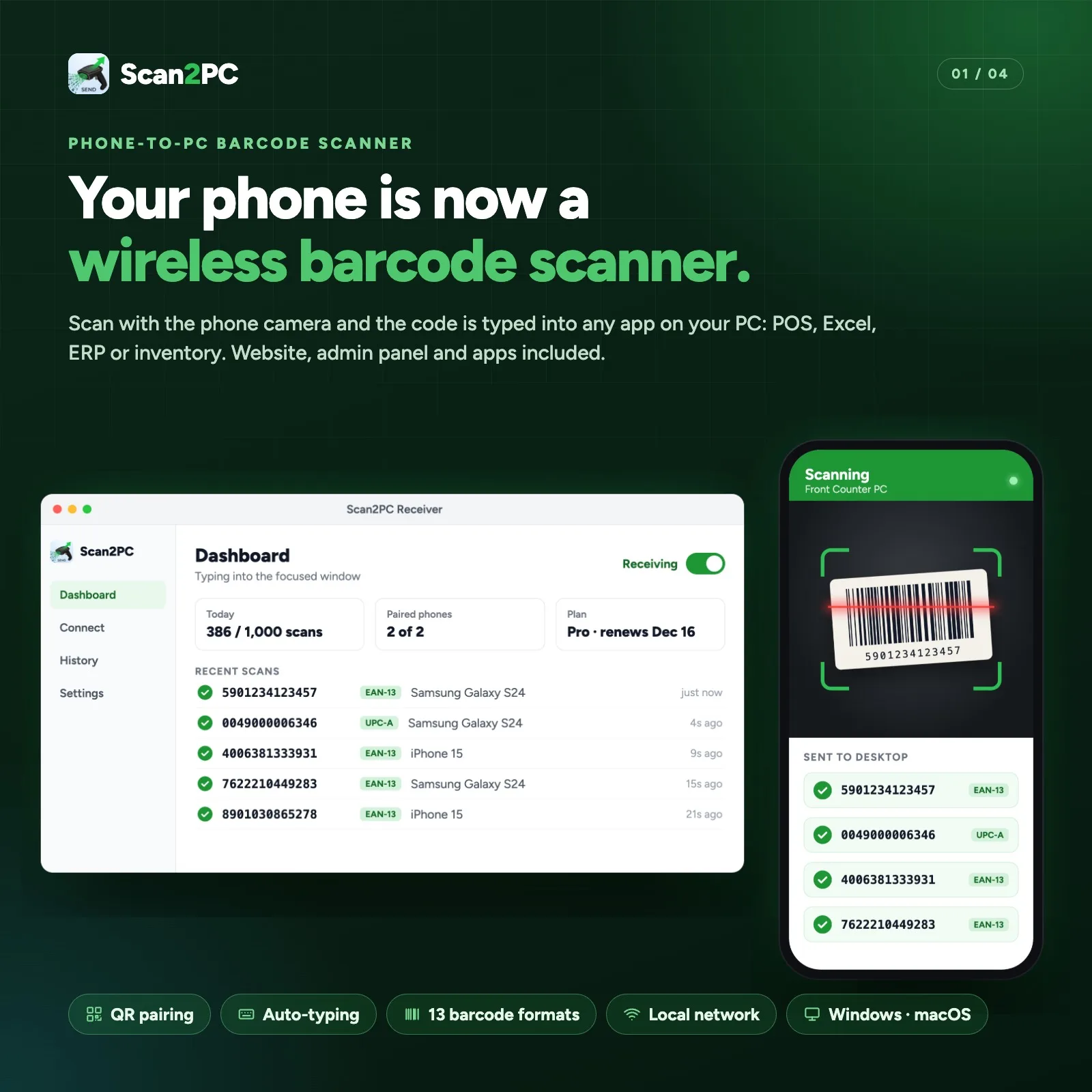
A hardware scanner costs money. A phone is already in their pocket.
Scan2PC is the whole product around that idea — not just the scanning app, but the desktop side that makes it useful and the subscription business that makes it pay.
The Android app (Kotlin)
- Camera barcode and QR scanning
- A local Room database, so scans are held on the device and nothing is lost when the connection drops
- A receiver connection that pairs the phone with a specific PC
- Device registration against the user's account, with the plan's device limit enforced
- Works as a continuous scanner, not one-shot — the point is to scan a shelf, not a single item
The desktop receiver (Python)
- Receives scans from the paired phone and enters them into whatever application has focus — the POS, the spreadsheet, the ERP field
- Authenticates against the same account
- Starts with Windows automatically, so the user never thinks about it after setup
- No driver, no dongle, no COM port
The Laravel back end
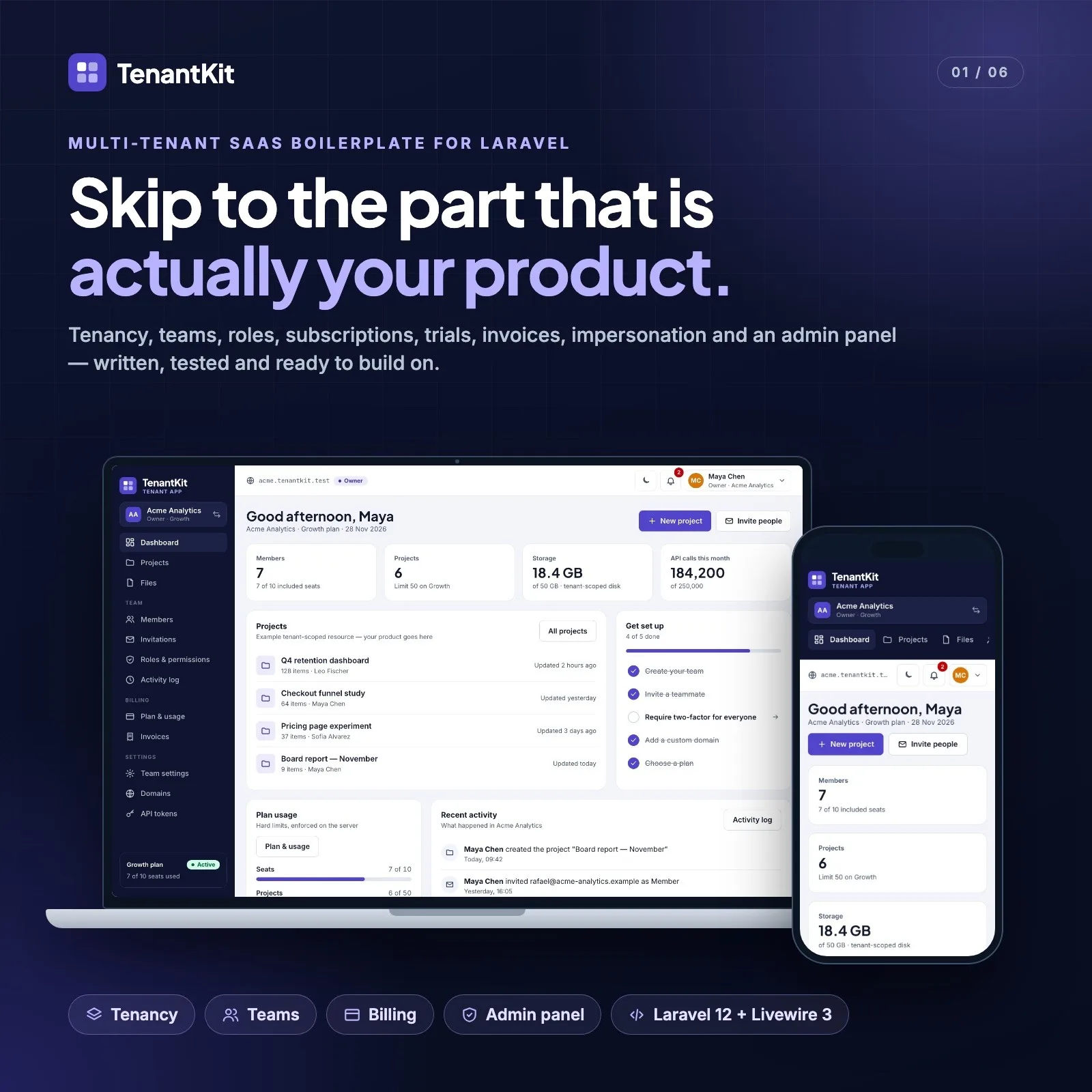
Subscriptions
- Plans with their own device and scan limits
- A scan counter per account — metering enforced at the API, so a plan means something
- Checkout and order handling on the web side
- Subscription endpoints for the apps to check status against
Devices
- Every phone and desktop registered and visible to the user
- Devices deauthorised from the account when a phone is lost or replaced
- App version endpoint, so old clients are told to update rather than failing strangely
Admin
- Users, plans, orders and reviews
- App version and download settings — you control what the download page offers
- Pages, FAQ, contact messages and site settings
- Dashboard over the whole thing
Why the architecture matters
The API is versioned (v1) and token-authenticated with Sanctum, and both clients talk to it the same way. A fourth client — an iOS app, a web scanner — plugs into the same endpoints without touching the server.
Stack
- Backend: Laravel, PHP 8.2+, Sanctum
- Android: Kotlin with Room
- Desktop: Python, with Windows autostart
- API: versioned REST, shared by every client
What you get
The Laravel web application, the Kotlin Android project and the Python desktop receiver in full source, with the API documentation.
 Paid